Lists: Top 10 Horror Movies (Part 2 of 2)

It’s easy to forget how good some horror films are given the junk that populates the genre.  I would count most of these titles among my all-time favorite films, but especially the top 5.  (And “Jaws,” of course.  A reminder that the film is exempt.)  If you haven’t seen the first installment of the list, click here.  Now, let’s get on with it.

The peculiar fella at the old gas station warns you against going any further if you’re frightened by spoilers.

5.) “Rosemary’s Baby”

RosemarysBaby-smaller

It’s probably clear by now that I’m a bigger fan of psychological horror than that of the splatter variety.  I just see gore as an easy means to get a rise out of an audience.  Few films manage psychological terror as well as “Rosemary’s Baby.”  Roman Polanski’s film is about a young woman (Mia Farrow) and her husband, who’ve just moved into a new apartment with plans to have a baby.  Her next door neighbors may…or may not…be interested in using her unborn child in a satanic ritual.  The film is a masterclass in compositions.  When we meet the husband next door, he’s staged on the left side of the frame in a wide shot.  The right side is empty.  Why the unbalance?  Why are we being kept at a distance from him?  Also check out a scene where Ruth Gordon’s Minnie, the next door wife, calls a doctor for Rosemary.  As Minnie makes the call, the camera is positioned outside the room such that her face is cut off by the door frame.  What are Minnie’s intentions?  What’s being said on the other end of the phone?  What does all this mean for Rosemary?  Polanski’s choices make you nervous, ratcheting up the paranoia.

4.) “The Shining”
shining_smaller

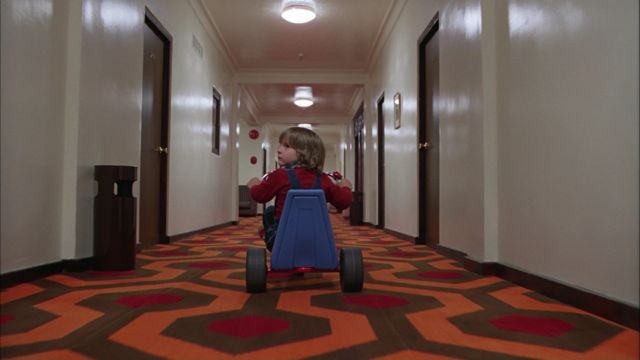
While its characterizations might be a little thin, “The Shining” works remarkably well on an atmospheric level.  From the opening credits, director Stanley Kubrick has me on edge.  A helicopter shot follows Jack Torrance’s car as it drives through a mountain range, just a speck in this rugged landscape.  The droning score and use of a wide-angle lens to ever-so-slightly distort the image never fails to put a knot in my stomach.  This adaptation of Stephen King’s novel, about a family overseeing a vacant hotel, is pretty unconventional for a horror film.  Yes, we’re stuck with characters in a confined (and haunted) space, but consider how the film is shot and lit.  Kubrick doesn’t use the darkness as a crutch.  Even night scenes — I’m thinking of Jack Nicholson chasing poor Danny Lloyd through a snowy hedge maze — are made clear with diffused lighting.  So many of the hotel’s interiors are brightly lit and fully in focus.  We watch young Danny play in the hallways, as series of doors stretch in either direction.  Danger could come from any one of them.

3.) “The Silence of the Lambs”

the-silence-of-the-lambs-smaller

In its two hour running time, “The Silence of the Lambs” accomplishes so much.  It’s a procedural, as the FBI hunts a serial killer named Buffalo Bill.  It’s a human drama, as trainee Clarice Starling (Jodie Foster) attempts to silence her demons by finding Bill’s kidnap victim before it’s too late.  It’s a feminist film, as Clarice navigates the politics of male-dominated law enforcement.  And yes, it’s a horror film, as evidenced not just by Buffalo Bill but Dr. Hannibal “the Cannibal” Lecter (Anthony Hopkins).  The first 10 minutes build anticipation and then undercut expectation.  We learn about Hannibal from Clarice’s superior and from his doctor at the asylum.  “Don’t let him inside your head,” “He’s a monster,” etc.  The doctor shows Clarice a picture of a nurse disfigured by Hannibal.  In a great bit of restraint, director Jonathan Demme refrains from showing us the photo.  Instead, we get the doctor’s description and Foster’s great reaction.  “His pulse never got above 85, even when he ate her tongue.”  As Clarice approaches Hannibal’s cell, we’re waiting for a gibbering madman.  What we get is the cool and calm cordiality of Anthony Hopkins.  This is a killer you might invite into your home.  The scene still gives me shivers.

2.) “Alien”

alien-smaller

I could watch “Alien” any time.  There’s a great economy of storytelling, with the screenwriters offering brief character sketches.  He’s the laid back Captain, he’s the alpha-male, she’s high strung.  There’s enough personality for us to care about these people.  Miners in space, they wake up from hyper sleep to a distress signal from a nearby planet.  Or maybe that signal is a warning?  I love the slow burn of the film, nothing horrific happens for about 40 minutes.  The strategy pays off thanks to director Ridley Scott and designer H.R. Giger.  Star Sigourney Weaver has said that she initially assumed she’d signed on to a B-movie, but Scott and Giger bring A-level craft.  The sets are all practical, the gloomy hallways of the mining vessel and the gooey corridors of the alien craft have often been imitated.  And then there’s the creature itself — brilliant in concept and execution.  It “impregnates” an individual and a critter comes bursting from the host’s chest.  The adult form is menacing as hell (and slightly phallic).  Contrary to many horror films, our characters make smart decisions to try to best this baddie, but they’re just inherently ill equipped to deal with the problem.

1.) “Psycho”

psycho_smaller

I excluded “Jaws” to resist the obvious, and then #1 comes along and I make the next most predictable choice.  But what are ya gonna do?  Alfred Hitchcock’s “Psycho” was a watershed moment in movies.  So much has been written about the film that I’m at a bit of a loss…so I’ll focus on two elements.  First, Bernard Hermann’s iconic score.  It’s excellent.  And I’m not just talking about the shower scene.  Consider how long it takes Marion Crane (Janet Leigh) to meet the business end of a knife.  We spend 50-ish minutes with her — she steals money from her bank, hightails it out of town, and meets a nice hotel clerk named Norman (Anthony Perkins).  This doesn’t look like the movie we signed up for, but it sure as hell sounds like it!  From the opening credits, Herrmann’s driving score leaves little doubt about the type of film we’re watching.  And then there’s that final twist, the one that reveals the nice hotel clerk occasionally masquerades in his mother’s clothes and knifes young women.  It’s tricky to follow one massive twist – Marion’s murder — with another.  Your audience is primed, looking in every nook and cranny (literally and narratively) for something to jump out.  But Hitchcock pulls the rug out from under us twice.  We watch as Norman dutifully cleans up his…uh…mother’s mess, placing Marion’s corpse in her own car and wiping down the bathroom.  It’s a great, dialog-less sequence that puts us in his corner.  Reportedly, audiences in 1960 gasped when it looked as though Marion’s car wouldn’t sink in the swamp.  “We’ve just seen this terrible murder.  Surely, this guy’s safe.  Right?  Right!?”  Admittedly, I suspect “Psycho” was instrumental in making audiences suspicious of their narratives.  Everything since has had to contend with that.

Thanks for reading! Here’s my complete “Jaws” Memorial List:

1.) “Psycho”

2.) “Alien”

3.) “The Silence of the Lambs”

4.) “The Shining”

5.) “Rosemary’s Baby”

6.) “The Thing”

7.) “Shaun of the Dead”

8.) “The Exorcist”

9.) “The Sixth Sense”

10.) “The Orphanage”

Honorable mentions include: “The Blair Witch Project,” “The Devil’s Backbone,” “The Innocents,” and “Invasion of the Body Snatchers” (the version from 1956 and ’78).

Do you have a favorite horror film? Comment below.

Lists: Top 10 Horror Movies (Part 1 of 2)

With Halloween around the corner, I thought I would count down my top 10 favorite horror movies.  I’ve chosen to exclude “Jaws”, since it would just be too obvious a choice.  Truth be told, you’re gonna see a lot of horror’s usual suspects here, but hopefully there’ll be some surprises as well.  I should stress that these aren’t necessarily the scariest movies I’ve seen, just my favorites from the genre.

Fair warning: spoilers are known to haunt this post.

10.) “The Orphanage”

the-orphanage

“The Orphanage” doesn’t exactly re-invent the wheel.  It’s about a mother who returns to the facility that cared for her in her youth.  She and her husband plan to reopen it to help disabled children.  A ghostly wrench is thrown in their plans when their ill son goes missing.  There are a lot of familiar elements: a large and gloomy estate, imaginary friends that are so much more, and creepy, unsettling kids.  It functions just fine as a family drama — Belen Rueda is really strong as the mother who will stop at nothing — but it makes this list because it’s frankly one of the most frightening films I’ve seen.  Director J.A. Bayona constructs sequences that are all-timers.  It has two of the best jump scares: one involving a woman crossing the street and another the immediate aftermath.  Later, a medium wanders the orphanage at night, her committed performance is bolstered by glowing green eyes (thanks to infrared cameras) and eerie sound design.  Finally, a game of one-two-three-knock-on-the-wall is distressingly suspenseful as the camera leisurely shows us what we want (or don’t want) to see.

9.) “The Sixth Sense”

Sixth sense

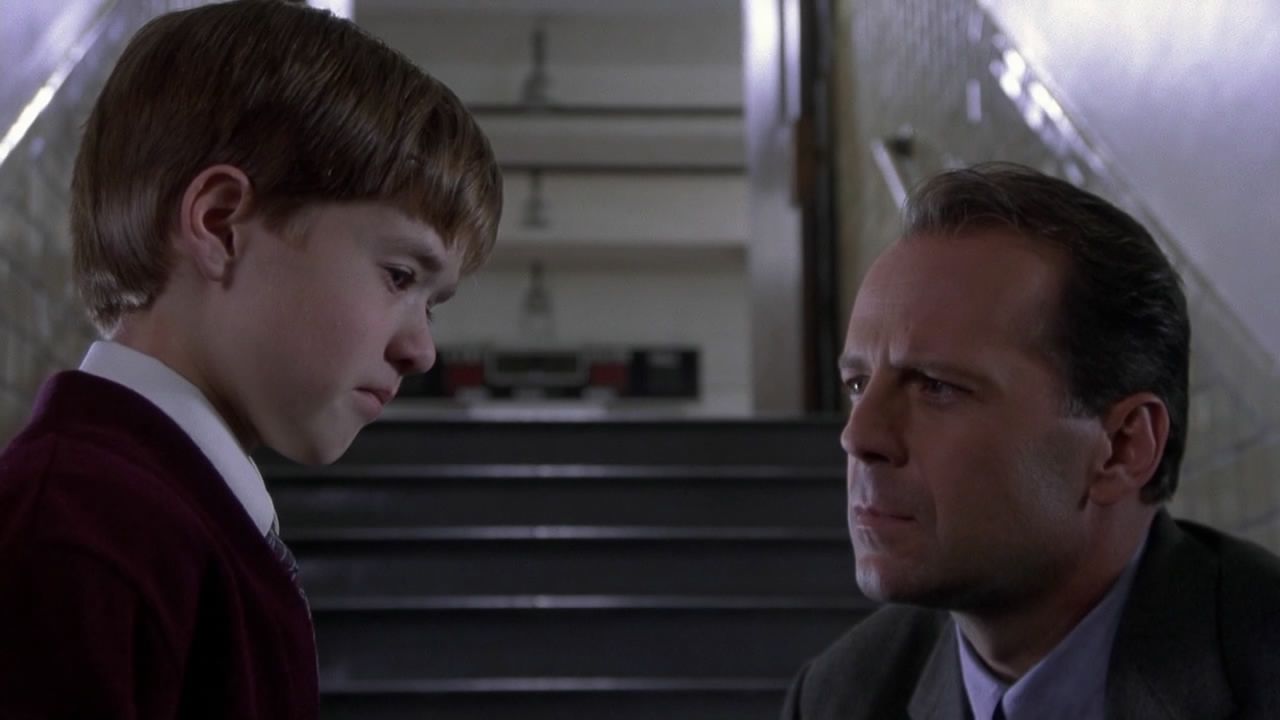
With movies like “The Happening” and “The Last Airbender,” it’s easy to forget how strong a filmmaker M. Night Shyamalan once was.  I like “Unbreakable” and “Signs,” but it’s hardly controversial to say “The Sixth Sense” remains his masterpiece.  Everyone remembers the ending — and it’s wonderfully constructed — but this is so much more than a twist film.  We’ve got two compelling central characters: a young boy who sees ghosts and a child psychologist looking to make good after a traumatic event.  Shyamalan finds ways to visually tell the story, such as a series of P.O.V. shots as the boy moves to and from his psychologist during a game.  Then there’s that ending — turns out Bruce Willis’s traumatic event was fatal. The twist works on a number of levels.  First and foremost, it holds together.  The ending adheres to the rules that the movie laid out (convenient though they may be).  As opposed to other films with similarly slippery endings (“I’ve been dead the whole time,” “I made all these people up,” “It was all a dream”), our protagonist’s actions have real-world consequences.  Finally, it concludes his arc.  Having helped a child in need, he can peacefully depart.

8.) “The Exorcist”

exorcist

Everyone knows the story of “The Exorcist” — a young girl is possessed by the devil.  But actually I don’t find William Friedkin’s film to be that scary.  Sure, there are some chilling moments.  A priest’s vision of his deceased mother on the girl’s bed still gives me goosebumps, but the film succeeds as a character-based drama.  We learn early on that Father Karras, the priest charged with performing the exorcism, is suffering a crisis of faith.  And when he’s confronted with the devil…well, that’s the stuff of drama.  Actor Jason Miller is the heart of the movie, wearing Karras’s anger, sadness, and confusion in the lines on his face.  It’s a testament to the film that its third act is so compelling.  At face value, there’s nothing particularly spectacular about it:  one set, three actors, lots of yelling.  But thanks to the great character work, we’re completely invested.

7.) “Shaun of the Dead”

shaun_of_the_dead

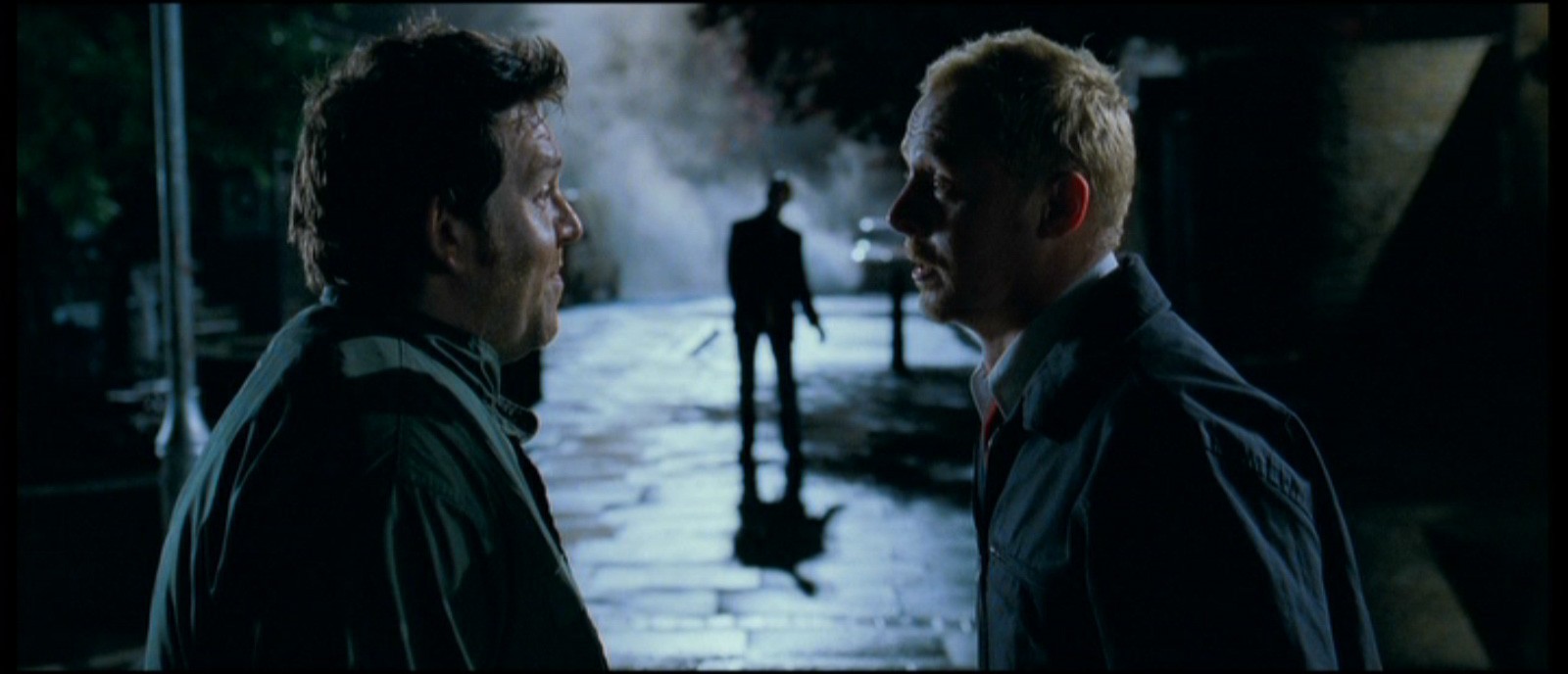
The first feature-length collaboration between Edgar Wright, Simon Pegg, and Nick Frost is still the best.  Though I enjoy the hell out of “Hot Fuzz” and “The World’s End,” neither of those films manage as stunning a blend of comedy, drama and genre.  In “Shaun of the Dead,” the titular character is a young man stuck between adolescence and adulthood — the former embodied by his endearing yet childish roommate, Ed.  Amidst turmoil with his girlfriend, who would like Shaun to do something with his life, a zombie outbreak erupts.  The film is stunning in the way it has you laughing one minute and on the edge of your seat the next.  Check out a scene where Shaun’s stepfather turns into a zombie.  Shaun tells his mother, voice brimming with emotion, “There’s nothing left of the man you loved!”  His stepfather then promptly mutes a loud car stereo.  While the writing is tight and the performances are excellent, Wright has carefully crafted his story for the silver screen.  There’s an amusing cut of sorts where a drunk Shaun scribbles on his refrigerator then falls asleep in the kitchen.  The camera remains stationary, but through a quick lighting change — Boom! — it’s the next morning and Shaun hasn’t moved.

6.) “The Thing”

the-thing3

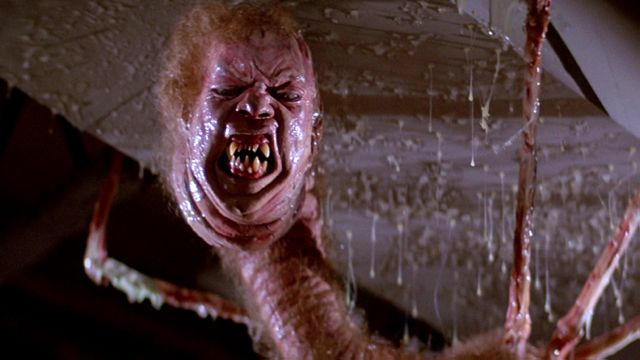
John Carpenter’s masterpiece — sorry “Halloween” fans — was not viewed particularly favorably upon its release.  Audiences in 1982 were looking for a close encounter of a warmer and fuzzier kind.  Paging “E.T.”  “The Thing” tells the story of a group of researchers in the Antarctic who stumble upon a shape-shifting alien with a penchant for assimilation.  There’s plenty of splatter here, thanks to Rob Bottin’s still stunning practical effects, but the real draw is the dread and paranoia that ensues from the creature’s arrival.  One great bit of tension comes from our protagonist, played by Kurt Russell, implementing a blood test to identify the creature.  Appropriately, the novella the film is based on is called “Who Goes There?”  So many of the film’s thrills come from our characters not knowing who to trust, and this may never be more potent than the film’s haunting final moments.

Stay tuned this Friday, Halloween, for my top 5 horror movies.  Comment below with some of your favorites!

Start Them Up!

It’s Friday!  And for many, that means payday!  If I may be so bold, I encourage you to use some of that hard-earned cash to support a pair of filmmakers, Ben DeLoose and Matt Chilelli.  Full disclosure: these guys are my friends.  But they’re also expert cookie bakers, wielders of puns, and talented filmmakers.

Ben_Matt_Gar

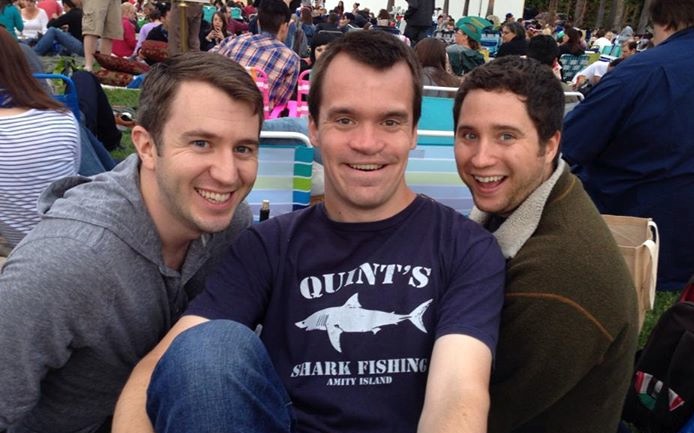
Those of you who’ve been following the blog since the beginning might remember that Ben and I have known each other for over seven years.  We met through an internship program in Los Angeles.  Matt and I both went to Ithaca College, but we didn’t connect until I moved to L.A. in 2009.  I’ve helped them out on a number of sketches and shorts, and we collaborate on a Youtube channel, 3byThree.

Ben and Matt are making their first feature…provided they meet their fundraising goal.  The premise is an intriguing spin on the haunted house genre.  While working on their Kickstarter video, I remarked that their apartment was ideal for a horror film.  There are so many corners and hallways.  Standing in one room, you can’t see into the next.  Their response: “We wrote our script around that!”  And of course they did.  Like any good low-budget filmmaker, they’ve designed this project with the resources already at their disposal.  (Why write the splitting of the Red Sea if you can’t afford a bathtub?)

dezwg

I don’t want to spoil the intricacies of their plot, but you can get a taste of what they’re after in the Kickstarter video itself:

By the number of set ups and lighting conditions, it’s clear Ben and Matt don’t do anything half-assed.  I can tell you first hand that this video took a lot of man hours.  These guys set the bar high.  The pitch is a great sampling of their humor, sensibilities and how they construct a scare.  You can see that they’re dedicated to using the properties of moviemaking — frame and camera movement, light, sound, etc. — to tell a story.  It’s an exciting project, and I’m really looking forward to the full feature.

I hope you’ll consider donating…$5 or $125, it all helps!

Conversations: “Gone Girl”

If you hadn’t gathered from last week’s “Fight Club” review, I’m a pretty big fan of David Fincher.  With “Gone Girl,” his latest, tearing up the box office, I wanted to get into a conversation about the film.  To help me with that, I’ve enlisted Ben Raymond.  Ben and I have been best friends for twelve years.  As two teenagers who loved classic films, we took a fast liking to one another in high school.  Ben is a graduate of Brown University, and he teaches high school English in Massachusetts.  Unlike myself, he’s read Gillian Flynn’s novel.

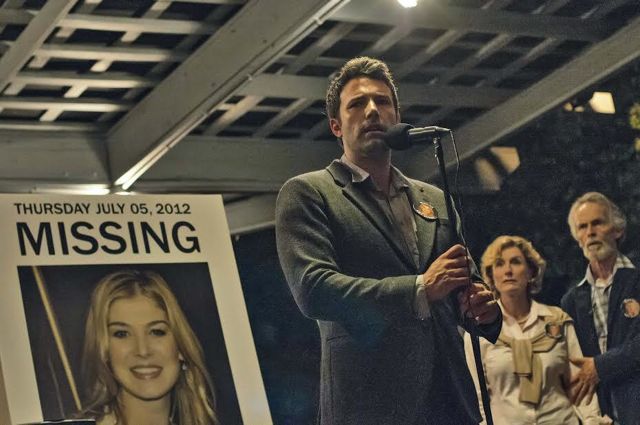
Before we get started, a brief plot synopsis.  We’ll definitely be getting into spoilers, starting…right…now:  “Gone Girl” is about the media circus that surrounds the disappearance of a married woman.  On his five-year wedding anniversary, Nick (Ben Affleck) comes home to find his wife, Amy (Rosamund Pike), missing and likely murdered.  The inspiration for a series of children’s books, her disappearance makes national headlines.  It isn’t long before Nick, a bit aloof, becomes the focus of the investigation.  In an effort to clear his name, he finds out that Amy isn’t dead, and she’s in fact trying to frame him.

gone-girl-ben-affleck

GAR:  Hi Ben!  Thanks so much for joining me.  What did you think of “Gone Girl?”

BEN:  I’ll be brief, as we have plenty of things to get to.  “Gone Girl” grabbed my nuts and pulled.  It pulled for 143 minutes.  It hurt.  It hurt so good.  Fincher is his typical meticulous self.  Affleck didn’t suck.  Tyler Perry didn’t make me want to gouge my eyeballs out with a spark.  Flynn’s screenplay snapped, crackled, and popped.  And Pike.  Rosamund.  Fucking.  Pike.

GAR:  I saw a lot of comparisons to Hitchcock’s female leads, and I agree.  Very icy.

BEN:  Hitchcock would have been proud to have made this movie.  Not only in its precision, its themes, its obsession with dirty little secrets, but in the very nature of its unfolding, in every facet of the film’s character.  We could go on ad nauseum about the subtle tension, the muted hate, the suburban realism, the boiling anxiety, the moments of quick, scalding violence.  That’s all Hitch.

Pike is Tippy Hedron.  She’s Janet Leigh.  More than anything, she’s Kim Novak.

GAR:  Yep!

rosamund pike-brighter

BEN:  And she’s brilliant in her own right, but she belongs with them.  Blondes that kill.  Blondes you thank for having killed you.  She’s Fincher’s Überfrau, which means “Superwoman” in German, from Nietzsche’s philosophy of the Übermensch.  In a nutshell, the Übermensch is a Superman who is so vastly more intelligent, more capable, more equipped than the masses, that he cannot help but dominate, manipulate, deceive, and obliterate.

That is Amy Dunne.  And Pike gets it.  She nails it.  Every time she returned to the screen, I shuddered.  I mean I got goosebumps.  She’s a monster.  A real-life, flesh-and-blood monster.  The best kind.  She doesn’t live beneath your bed, or creep around your basement.  And she doesn’t live in your closet, because she’s got too many of your skeletons in there.  She just eats you from the marrow-out.  And you want her while she does it.

GAR:  Amy is a great actress, in large part because she understands her audience.  One of the most devastatingly funny scenes is when she’s being interrogated by the police after she’s come home.  She’s spinning this story about kidnapping and abuse, and Kim Dickens’s detective, who’s been investigating the case, isn’t having any of it.  Of course, everyone else in the room (perhaps not-so-coincidentally all men) is eating out of her hand.  She just keeps spinning them and spinning them.

That aspect of it, I suppose, is pretty noir.  There’s a Barbara Stanwyck-“Double Indemnity” quality to Pike’s Amy.  The femme fatale.

BEN:  Most certainly.

GAR:  One of my favorite shots in the movie is when Amy and Nick are in the shower, after she’s returned home.  (She wants to make sure he isn’t wearing a wire.)  She’s covered in the blood of Neil Patrick Harris’s Desi whose throat she slit after framing him for her kidnap and rape.  We cut to a close-up of his blood washing down the drain — there’s another Hitch reference — and it’s as though she’s washing herself off to put on her costume.

BEN:  We may want to touch on its echoes of “Rear Window.”  There’s some meta-cinema in “Gone Girl” that critics are missing.

GAR:  The voyeurism?

BEN:  The cameras everywhere, the way we put on all these faces, masks, personalities, lies, acts.  Everything.  EVERYTHING in this movie is an act.  And when we see moments of honesty, few there may be, we see the backstage of life itself.  In that sense, I think it’s more than peeling away our selves and putting on costumes (which is very true of this film).  I think the entire film comments on film.

GAR:  One of the moments that struck me, and I think it speaks to this, is when she returns home (again, covered in blood) and she faints in Nick’s arms on their front lawn.  All the cameras flash, of course, and I wondered if we were gonna end right there.  It was all such theater, the loving wife returning to her husband in front of their picturesque house.

I wanna touch on the pace, because it moves at a pretty blistering speed.  There’s so much movie in the first hour and fifteen minutes that I was anticipating the mid-point — the reveal that the wife was still alive — was actually the beginning of the third act.

The one thing that’s been nagging at me, though, is the ending.  I wonder if it couldn’t have ended 10-15 minutes earlier.  Maybe not just then on the lawn, but at that moment, I saw where the movie was going.  The final scenes were a bit deflating.  Another scene…another one…and another…  What did you think?

BEN:  In the book, Nick and Amy precariously try to make the best of their screwed-up marriage.  It’s a brutally tragicomic ending that I personally thought appropriate, but only if you understand Flynn’s searing wit and humor.

To the film, I hadn’t thought of it like that.  If Amy fainting and Nick holding her had been the last shot, like the end of some Wagner opera, that would have been clever!  Maybe you add the bookend from the beginning, with Amy’s head on Nick’s stomach as he wants to “unspool her brains.”  That would be fine.  But yes, I agree that the ending was repetitive.

GAR:  Alyssa [Garrett’s wife] and I even talked about having it end with Nick entering that room, locking the door, and holding his cat.  He’s a [willing] prisoner in his own home.  It’s such an absurdist film that all the narrative and motivational gymnastics they do — dotting the I’s and crossing the T’s to demonstrate why this guy is sticking around — seemed out of place.

BEN:  Call me crazy, but how fucking great would it have been if the last shot was the cat slowly walking into a bag of groceries?  Think about it!  That is exactly what Amy accomplishes.  She puts the cat back in the bag.

GAR:  I love it!  One of the things that marks this as a Fincher film is its lacerating sense of humor.  With movies like “Se7en” and “Zodiac,” it’s easy to forget how funny he is.  See also:  “Fight Club” and “Social Network.”  It sounds like the novel brought a lot of black comedy to the table as well.

937950-Girl With The Dragon Tattoo, The gf

BEN:  Oh yes.  You almost forget that it’s knee-slappingly funny at times.  And never cheaply.  Stick with me here…I think Fincher reaches a Pixar-esque achievement in “Gone Girl.”  That is to say two completely different moviegoers can watch, understand, and appreciate the film in two completely different ways.  A 2-year-old can enjoy “Finding Nemo.”  (Don’t take her to see “Gone Girl,” though).  But a 92-year-old can enjoy it, too.  And for different reasons entirely.  Fincher and Flynn’s humor operates exactly like that.  Causal filmgoers laughed, serious filmgoers laughed.  You can appreciate the joke as just viscerally funny, like tossing gummie bears into Nick’s mouth, or you can appreciate the overall humor of the absurdist plot.  It’s amazing!

GAR:  I never thought I would see Fincher and Pixar in the same sentence, but you make a strong case.  So much of the laughs, again, came from the theater of it.  Another painfully funny scene is the press conference after Amy’s disappearance.  Nick speaks very briefly, and he isn’t particularly heartfelt.  Later, he rightly points out that that doesn’t make him a murderer…though it might as well in the court of public opinion.  Then we get Amy’s parents and their prepared statements.  I loved the detail of her mother holding note cards.  There’s a great ballet of looks from Nick to his sister, Nick to the police officers on the case, and the officers to each other.  All saying, in different ways, “This guy is screwed.”  And as soon as he flashes that smile, you just know it’s going to come back to bite him.

BEN:  Agreed entirely. And I think that goes back to Fincher’s precision.  People talk about Michael Haneke or Roman Polanski being the exactos of filmmakers.  And they are, but where they make precise cuts, Fincher makes precise gashes.  Long, careful, arterial gashes in the audience, in his stories, in his characters.

GAR:  Well said!  Anything else you want to talk about?  I thought the score was magnificent.  I saw a quote from Fincher where he told composers Trent Reznor and Atticus Ross to think about the music you would hear in a massage parlor.  That absolutely comes across, though it’s turned a degree toward the nauseating.

BEN:  My favorite flourish, coupled with Kirk Baxter’s editing, is Desi’s murder.  The throbbing, arterial push.  The baseline.  The music bleeds out. Jesus.

GAR:  Ben, I had a lot of fun.  Thank you so much for doing this!

BEN:  Anytime, amigo.  Don’t walk with Alyssa through a cloud of sugar.  She might frame you for murder and kill Neil Patrick Harris!

GAR:  Noted.  Thanks a lot, buddy!

What did you think of “Gone Girl?”  Comment below!

Review: “Fight Club”

In honor of the 15th anniversary of “Fight Club” and to coincide with the release of director David Fincher’s latest, “Gone Girl,” I thought I would review this 1999 cult classic. I’m afraid, by talking about it, I’ll be breaking the first two rules of Fight Club. So you’ve been warned…spoilers ahead!

Truth be told, I wasn’t big on “Fight Club” after first seeing it.  A lot of the humor escaped me, but in the 15 years since its release, it’s gotten better with each viewing.  There’s exuberance in Fincher’s filmmaking, from tricks from the silent era to his use of state-of-the art toys.  It’s some of Edward Norton and Brad Pitt’s best work, and Jim Uhls’ script streamlines the novel by Chuck Palahniuk while maintaining his scalding sense of humor.

The film opens with one hell of a credit sequence, which doubles as a tour of the Narrator’s mind.  Norton is great in the role, depicting a man so consumed by his possessions that he’s anesthetized himself to everything and everyone else.  He has a fridge full of condiments and no food — all decoration but nothing to hang it on.  Following super-serious roles in “Primal Fear” and “American History X,” Norton proves he can do comedy.  With a gun in his mouth, he wryly observes in voice over “I wonder how clean the gun is.”

edward-norton

Foreshadowed by the credits, we spend the whole movie knocking around the Narrator’s head. One thing that struck me on my recent viewing was the sound design.  The movie’s packed with aural touches to cue us into the character’s psychology.  In an effort to feel something – anything – the Narrator joins a slew of support groups where he doesn’t belong.  At a meeting for testicular cancer, he’s embraced by Meat Loaf’s Bob and begins to cry as a church choir creeps into the soundtrack.  In another great moment, Fincher’s (virtual) camera drifts through a wastebasket filled with cups from Starbucks – at which point the Narrator warns that with the advance of deep space exploration, corporations will name everything.  What sounds like a sonar ping evokes the vast emptiness of space.  [“But Garrett, there’s no sound in space!”  I know!  I read the “Alien” tagline.]

Space meme

Particularly in the first half of his career, Fincher occasionally indulged in technical wizardry that could derail scenes.  I’m looking at you, “Panic Room.”

coffee-pot-meme

Sure, in “Fight Club,” there’s some superfluous digital camera, but I thought Fincher’s choices were really inspired.  I’ve already mentioned the “camera” in the wastebasket, but another great moment comes when the Narrator walks through his apartment.  Names and descriptions appear over his Ikea-bought items. They consume him.  Here’s a man drowning in his possessions.

When his support group scheme is foiled by another faker, Marla (Helena Bonham Carter), the Narrator inadvertently creates imaginary friend Tyler Durden (Brad Pitt).  Tyler looks like the Narrator wants to look, acts like he wants to act, and says what he wants to say.  Together, the two start Fight Club.  It’s an organization where men assemble to re-assert their dominance and truly feel something.  Ya know, knuckles to the face or a knee to the ribs.  Tyler tells his followers, “We’re the middle children of history…Our Great War’s a spiritual war.  Our Great Depression is our lives.”  But some roughhousing and a few minor acts of rebellion quickly escalate.

When Bob returns to Fight Club HQ with an exit wound at the back of his head, the Narrator realizes how wildly out of control his organization has spiraled.  Only then does he realize that Tyler is a figment of his imagination.

Although the filmmakers have laid out a number of clues, I’ve never gone over the twist with a fine-tooth comb. Frankly, I don’t think it matters that much.  This is a film where the Narrator breaks the fourth wall and characters comment on flashback humor.  More importantly, “Fight Club” doesn’t leave you with the twist.  It’s the jumping-off point for the third act.

The end of this film is ultimately about whether or not the Narrator can suppress the worst aspects of himself, and it’s a joy to behold.  There’s a great skewering of the traditional bomb-defusing scene.  While the Narrator tries to stop a device designed to level a building, his alter ego goads, “Maybe, since I knew you’d know, I spent all day thinking about the wrong wires.”  A confrontation between the Narrator and Tyler ranks among my favorite movie fights.  Fincher uses old school tricks like cutting on action and body doubles to give the sense that our Narrator is fighting someone that can do anything and be anywhere.  He offers amusing glimpses of security footage that reveal our Narrator is, in fact, just fighting himself.

In one of the movie’s more darkly comedic passages, member of Fight Club surround poor Bob, who’s lying dead on a table. Like lemmings, they repeat after the Narrator, practically chanting “His name is Robert Paulson! His name is Robert Paulson!”

Some criticized the movie for glamorizing this lifestyle, but how anyone could watch these clowns and think the filmmakers are condoning them is beyond me. The film certainly appreciates a certain level of rebellion, but it also demonstrates how easily rebels can fall down the rabbit hole. The block-busting final images (heh heh) represent one man’s struggle with those impulses writ large.

What are your thoughts on “Fight Club?”  It’s okay to break the first two rules here, this is a safe place!

Sketchy Sunday: Totoro

I’ve always been a sketcher, so I thought I would use the blog to showcase some of my work.

A couple months ago, I had the pleasure of seeing “My Neighbor Totoro.”  It’s a wonderful Japanese film that captures childhood’s sense of play and imagination better than most.  It’s made with so much care and patience, with a late-blooming subplot involving our protagonists’ mother being the only real sign of a more standard, histrionic children’s film.  Totoro is a mystical forest creature that our two protagonists, sisters, attach themselves to.  I whipped up this sketch the day after seeing it.

Totoro-smaller

Looking at it now, he’s ever so slightly lopsided.  This annoys me to no end.